


Introducing RapidCert™ Biological Indicator (BI) Sterility TestingNelson Labs’ patent-pending solution for quicker sterility confirmation. Learn More
Header Artwork

Find a test


A panoramic, high-key banner image featuring a smiling female scientist positioned on the right side, wearing a white lab coat and clear safety glasses while looking off-camera. The background shows a bright, out-of-focus laboratory environment with a row of small bottles on a shelf, seamlessly fading into a solid white space on the left side of the frame.

RapidCert™ BI Sterility Testing

*Patent pending

Reduced incubation time to accelerate product release.

Contact Us

Compare RapidCert™ BI Sterility Testing to the Compendial Method

RapidCert™ BI TestingCompendial Method
Incubation time48 hours7 days
Contamination-detection methodInstrument based (objective)Visual (subjective)
Applicable BI typesBI spore strips or discs made by various manufacturers and containing different microorganisms.BI spore strips or discs made by various manufacturers and containing different microorganisms.
Conformity to ISO 17025YesYes

Applicable Standards

  • USP <1223>
  • ISO 11138 parts 1–4 and 7

Study Outline

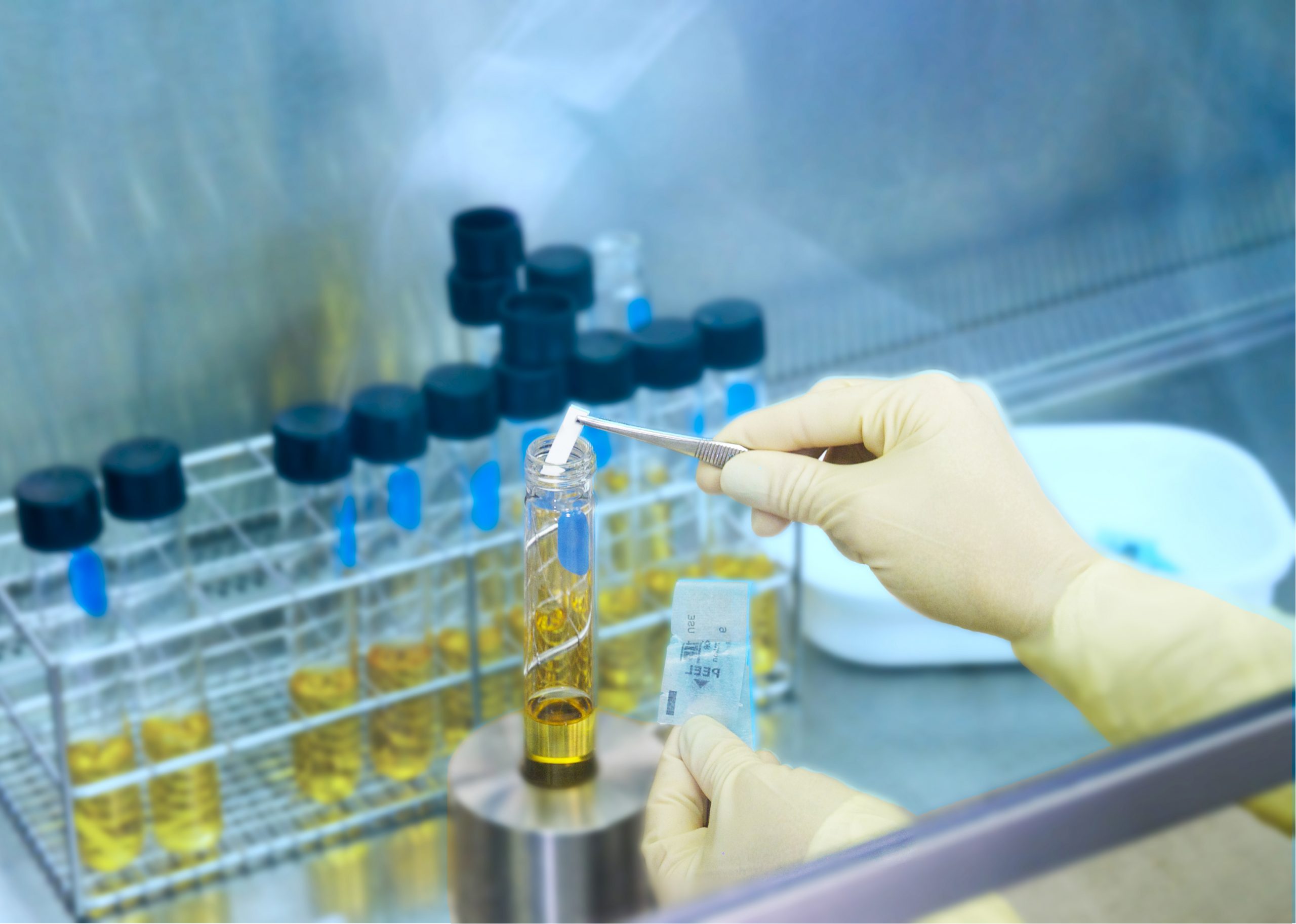
With RapidCert™ BI testing the BIs are aseptically placed into soybean casein digest broth and incubated for the appropriate time and temperature, depending on the growth requirements for the indicator organism. The samples are typically incubated for 48 hours minimum at 30–35°C for Bacillus atrophaeus (EO or dry heat sterilization). Currently, the rapid BI process has been validated on Steris or Mesa large strips only. Other incubation conditions and BI types may be validated upon request.

Testing Locations

  • Salt Lake City, UT, USA
  • Itasca, IL, USA

Learn more about our locations and their certifications.

Contact Us

If you have additional questions, contact one of our global offices by email or phone.

North America
Phone: +1 (801) 290-7500 or +1 (800) 826-2088
Email: [email protected]


Europe
Email: [email protected]

What is RapidCert™ BI sterility testing (or RapidCert™ BI testing), and how does it differ from compendial BI testing?

The standard BI testing method requires a 7-day incubation period after the BIs are removed from a sterilization load. Using rapid microbiological methods, RapidCert™ BI testing only requires an incubation time of 48 hours.

RapidCert™ BI testing utilizes adenosine triphosphate (ATP) bioluminescence detection as a signal for microbial growth. With RapidCert™ BI testing, subjective visual inspections for turbidity and microbial growth are replaced by instrument-based data.

What are the key benefits of RapidCert™ BI testing?

The primary benefits include:

  • Faster product-release results—Results are available in approximately 3 days.
  • Easy implementation—No changes to manufacturers’ existing sterilization validation cycles.
  • Proven results—Established technology that has been validated to be equivalent/non-inferior to the compendial test method.
Does RapidCert™ BI testing comply with regulatory requirements?

Yes. RapidCert™ BI testing is a Nelson Labs-validated alternative method that adheres to USP and PDA TR33 and is accredited for conformity to ISO 17025. It was validated according to these standards to ensure regulatory acceptance and Good Manufacturing Practice (GMP) compliance. This alternative method was also validated to be equivalent/non-inferior to ISO 11138-7 Sterilization of Health Care Products – Biological Indicators – Part 7, which provides general guidance on BI testing. Additionally, a master file for RapidCert™ BI testing has been submitted by Nelson Labs to the FDA under MAF-3939.

What types of BIs can be used with RapidCert™ BI testing?

RapidCert™ BI testing has the potential to be used with BI spore strips or discs made by different manufacturers and containing different microorganisms. Nelson Labs has validated two common BI types and additional types of BIs can be validated upon request.

Where is RapidCert™ BI testing available?

RapidCert™ BI testing will be performed at the following Nelson Labs facilities:

  • Salt Lake City, Utah
  • Itasca, Illinois
  • Wiesbaden, Germany (coming soon)
  • Ontario, California (coming soon)
Are customers going to have to validate the RapidCert™ process with their BIs?

No. If customers are using the BI types that Nelson Labs has already validated, they will not have to perform additional validation work. Nelson Labs has already completed the necessary requirements, and customers can leverage Nelson Labs’ validation for their justification. Nelson Labs can provide customers with a summary letter to add to their medical device file.

Does Nelson Labs provide support for the process of regulatory submissions?

Yes. Nelson Labs can support you with regulatory submissions through its regulatory consulting branch, Regulatory Compliance Associates (RCA). Whether you’re preparing an initial submission or updating an existing one, RCA offers comprehensive regulatory expertise to help guide you through the process efficiently and in compliance with applicable requirements.

Will a new EO sterilization validation be needed in order to take advantage of RapidCert™ BI testing?

No. The incubation of the BIs is unrelated to the effectiveness of the process already validated. Since this test method is already validated, we don’t need to do a validation as a part of the sterilization process itself (the cycle process is unaffected).

A faded, high-key abstract background image in pale blue tones, subtly showing the faint silhouettes of laboratory glassware, including a petri dish and a graduated pipette.

Get Faster BI Sterility Results. Partner with Nelson Labs.

When it comes to sterility test methods, be sure you have a partner who can support your products and processes.